


Ever wondered how a good plan can make your hut trip feel just right? When you take the time to plan, you remove the guesswork and enjoy a safe, rewarding day on the trail. Picture packing only what you need, savoring a hot meal at your favorite hut, and getting a great night's rest for the next day's adventure. Our simple guide shows you how to map your route, sort your gear, and match your pace with nature. Let’s make planning as smooth and memorable as the hike itself.
Step-by-Step Planning Guide To Your Mountain Hut Itinerary
Start by drawing up a clear plan that covers your whole mountain hut journey. Whether you’re trying hut hopping for the first time or you’re a regular, these eight steps will help you pack light, enjoy a hot meal and a warm bed, and handle the challenges of high mountain trails.
- Decide how long your trip will be and choose a route that fits your fitness and experience. If you’re new to hut trips, a five-day adventure might be the best start.
- Check how much gear you can comfortably carry. Remember, the huts provide meals and bedding so you only need to bring the essentials.
- Choose your planning style. You can plan your route on your own, follow a ready-made itinerary, hire a trip planner, or join a group excursion.
- Study maps and hut details. Use a full overview map along with the hut information pages to see rates, capacity, and meal options.
- Use topo maps (maps that show hills and valleys). They help you see distances, elevation gains, and the lay of the land to avoid surprises on rough tracks.
- Look at the route specifics. Guidebooks can show you key details, such as when a dense forest opens up to a sunny mountain ridge.
- Keep safety in mind. High-altitude trails and heavy packs mean you need to be comfortable with map reading, basic first aid, and sometimes even using a compass.
- Put it all together. Match your trip goals with the latest weather forecasts and seasonal tips. Be sure to build in rest times and backup options in case conditions change.
Following these eight steps will keep your planning neat and clear. With a solid plan, a realistic view of your limits, and a focus on safety, your hut adventure will be simple and memorable.
Selecting Routes And Alpine Huts For Your Multi-Day Itinerary

Pick routes that match how long you want to be out on the trail. If you're new to hut trips, try a plan of up to five days. These shorter trips help build your confidence. Book in the shoulder seasons when there are fewer hikers and huts are easier to reserve.
Different regions offer their own style of hut life. Many refugios serve shared rooms, set-menu dinners, and breakfast buffets. If you want a private room, expect to pay a bit more. The area you choose will shape your trip. Think about whether you want a relaxed scenic stay or a more practical, no-nonsense cabin experience.
Consider the time of year when planning your route. Booking in quieter times means more space and a calm vibe. For example, the Alps offer extensive networks in the Italian Dolomites and Swiss, Austrian, and French regions. Scotland’s Highland Way gives you a long trail with plenty of hut stops. In Norway, a chain of shelters welcomes hikers through Fjord Country. In New Zealand, the Great Walks are well-known, but require booking ahead. Meanwhile, Nepal’s Teahouse Treks are perfect if you prefer a guided adventure, and Kyrgyzstan’s Tian Shan offers a rugged route with fewer services.
| Region | Typical Duration | Peak Season | Booking Tips |
|---|---|---|---|
| Alps | 5 days | Summer | Book in the shoulder seasons |
| Scotland’s Highland Way | 5 days | Summer | Reserve early |
| Norway’s Fjord Country | 4 days | Summer | Check local weather |
| New Zealand’s Great Walks | 4-5 days | Summer | Book in advance |
| Nepal’s Teahouse Treks | 5 days | Spring/Fall | Consider a guided group |
| Kyrgyzstan’s Tian Shan | 5 days | Summer | Allow extra time for fewer services |
step-by-step mountain hut itinerary planning: Pure Bliss
Start by setting a steady pace for each day. In summer, plan to cover about 13 km (8 miles) with climbs of around 450 to 760 m (1,500 to 2,500 ft). In winter, you might walk about 10–11 km (6–7 miles) at high elevations around 2,400 m (8,000 ft) or more. On rough trails, keeping a pace of about 3 km (2 miles) per hour works well. This steady rhythm lets you enjoy the trail and gives you time to check the path and handle tricky sections.
Build extra time into your schedule. Add minutes for breaks, quick photo stops, or any unexpected delays on steep or uneven parts. These buffers help reduce stress when a day takes longer than planned. They also let you adjust your distance as needed based on the climb, weather, and how the group feels.
If the group slows down or the weather turns tricky, shorten your planned stage or take more breaks. Changing your plans on the fly keeps everyone safe and makes sure each day of your hut trip feels truly blissful.
Essential Gear And Packing Tips For Hut Trips
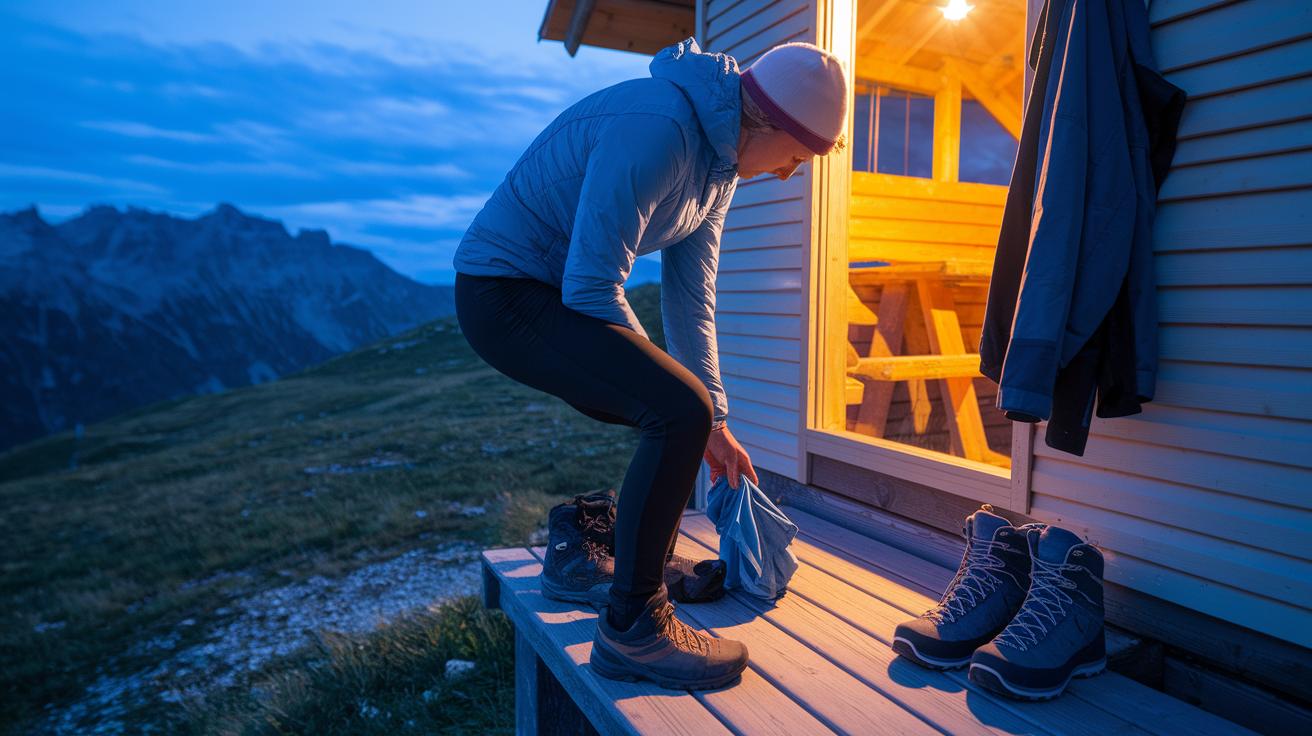
Pack your clothes in layers. Begin with a light base layer that pulls moisture away from your skin. Next, add a warm mid-layer for when the temperature drops. Top it off with a waterproof jacket for those rainy mountain spells. This way, you can easily adjust to the weather without overloading your pack. Think of it as your personal climate control for both sunny hikes and cool, crisp evenings.
Wear sturdy hiking boots that support your ankles on rough, rocky paths. When you reach the hut, swap them for light flip flops or indoor shoes to let your feet rest. Also, bring a sleep system, like a sleeping bag or liner, if the hut doesn’t provide bedding. A good night’s sleep sets the tone for a safe and fun day on the trail.
Keep your pack light with only the basics. Bring along trekking poles to help with steep climbs, a headlamp for any surprise night travel, and a small first aid kit to treat minor scrapes or blisters. Since most huts serve meals, skip packing too much food to avoid extra weight and to keep critters away. If you need extra gear along the way, consider using a luggage transfer service. For a more detailed list, check out this multi-day hiking packing checklist.
Digital And Print Resources For Hut Itinerary Planning
Digital Planning Tools
Today’s GPS hiking apps work offline. They give you maps and waypoints to follow remote trails. AI trail planners help shape your route by checking distance, elevation, and time so you know how long each part takes. Online filters let you sort huts by season, size, or features. Think of these tools as a trusty map on your phone that guides you even when cell service is low. And if you need help on the trail, how-to videos and quick phone support are right there.
Printed Maps And Guidebooks
Printed topographic maps and hut guidebooks are a solid backup to digital tools. They show hut spots, nightly rates, seasonal details, and even local weather hints. With these hard copies, you can trace where trails twist and turn, and see distances and climbs clearly. If technology fails, a printed map gives a clear, tactile view. Many hiking stores let you order these materials in advance so you always have a reliable reference when mountain weather changes.
Safety Measures And Risk Management For Mountain Hut Trips

Mountain hut trips need you to be well prepared. You must know how to read a map and use a compass (tools that help you find your way) and be ready with basic first aid. These skills matter when trails are hard to follow or weather changes fast. Heavy packs and uneven ground only add to the challenge, so planning ahead is key.
These trips can be tough on the body. You might face long days, steep climbs, and high-altitude paths that test your strength. The weight of your gear on narrow trails can wear you out quickly. Keep a steady pace and take short breaks often to avoid overdoing it.
Going up to higher elevations means you need time to adjust. Ease into a faster pace and include rest days so your body can adapt. Drink plenty of water and warm up gently to help avoid headaches or dizziness.
When you stay at a hut, stick to simple rules. Keep quiet during rest hours, share tasks with others, and help keep the space clean. This way, everyone enjoys a respectful and safe stay.
Booking And Confirming Hut Reservations For Multi-Day Excursions
When you review a hut’s details, check the nightly rate, the number of beds, and the meal options offered. Look for any extra fees if you want a private room. Using filters like season and group size helps you find the hut that best fits your needs.
Plan your booking early. For busy routes like New Zealand’s Great Walks, reserving ahead is key. Keep an eye on seasonal trends and hut availability so you can lock in your spot without any delays.
When you book, use a secure payment method. Always double-check the cancellation rules and any deposit requirements. Save digital copies of your confirmations, as this can be a lifesaver when you’re in remote areas with spotty cell service. This way, if plans change, you’ll have a backup without added stress.
If you need to adjust your plans last minute, reach out to the hut directly. A quick call or message can help you avoid extra fees and secure another option if needed.
Final Words
In the action, we outlined a clear, step-by-step mountain hut itinerary planning process. We walked through design stages, from route selection and scheduling daily hikes to figuring out essentials and confirming reservations. The guide covered digital tools, printed maps, and how to manage safety and risk so you can focus on the beauty around you.
Each phase helps simplify hut-to-hut trekking. Follow these steps, trust your planning, and embrace every moment on the trail. Enjoy your trip and safe mountain moments ahead!
FAQ
Q: What is the step-by-step process for mountain hut itinerary planning?
A: The step-by-step process for mountain hut itinerary planning starts with researching routes and huts, gathering maps and guidebooks, and planning each day’s stage. Online resources and forums, such as Reddit guides, can help you develop a complete plan.
Q: What is a hut trip tent?
A: The hut trip tent refers to a lightweight, compact tent used for additional support on hut trips. It offers an option when a hut does not supply bedding or in case of extra caution on unpredictable weather conditions.
Q: Where can I find information on 10th Mountain Division huts including a guide and map?
A: Information on 10th Mountain Division huts is available through dedicated associations and online guides that provide maps, ratings, and detailed descriptions. These resources help you identify the best huts based on your needs.
Q: How do I pack for a hut trip or follow a 10th mountain hut packing list?
A: The packing list for a hut trip includes layered clothing, sturdy boots, and essential gear like trekking poles and a headlamp. Follow a 10th mountain hut packing list to keep your load light while covering all your needs.
Q: How far in advance should I book huts in the Dolomites?
A: Booking huts in the Dolomites is best done several months ahead, especially during peak seasons. This ensures you secure a spot, avoid last-minute hassles, and align your itinerary with available amenities.
Q: How do you plan a hut-to-hut hike in Austria and how does it work?
A: Planning a hut-to-hut hike in Austria involves studying route maps, checking individual hut details, and creating a daily schedule. Hut-to-hut hiking means you travel light, ending each day with a comfortable meal and bed at a local hut.
Q: What should I know about huts like Francie’s Cabin, Broome Hut, McNamara Hut, Harry Gates Hut, and Point Breeze Cabin?
A: Huts such as Francie’s Cabin, Broome Hut, McNamara Hut, Harry Gates Hut, and Point Breeze Cabin each have unique features and local charm. Research their individual pages to review rates, capacities, and available services before planning your trip.